


Monkey Gland
The original recipe: a dash of absinthe. Drier, more bitter and more herbal.
See the recipe →Gin, orange juice, grenadine and a dash of pastis in place of absinthe: the Monkey Gland made with what you have at home, softer and with more liquorice.
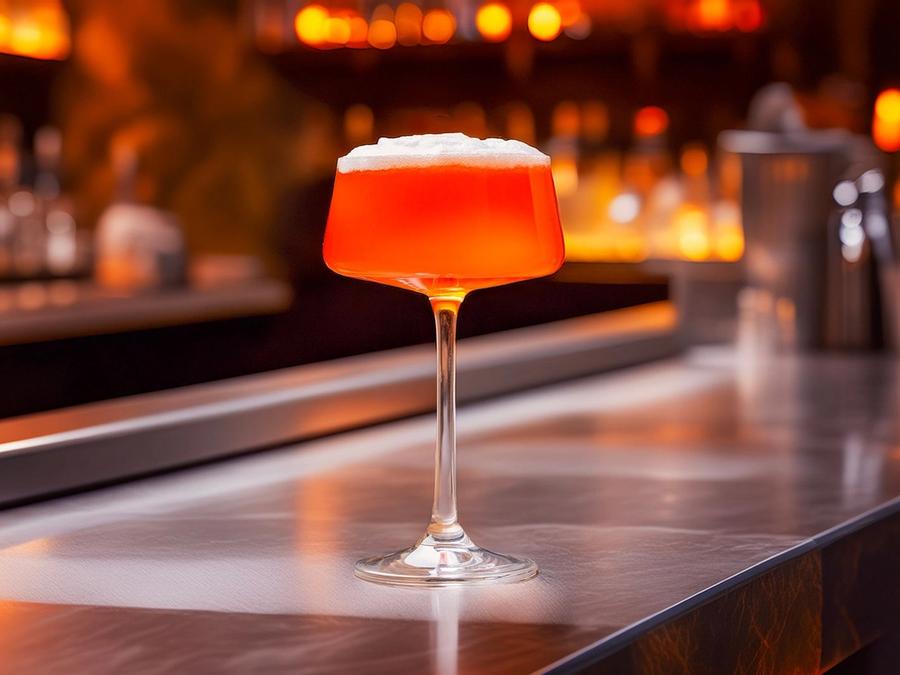
The Monkey Gland was created in the early 1920s by Harry MacElhone at Harry's New York Bar in Paris: gin, freshly squeezed orange juice, grenadine and a dash of absinthe, the "green fairy", a herbal, aniseed-flavoured spirit. Its odd name comes from a medical fad of the time: monkey gland grafts that were meant to restore youth. Absinthe is often missing from home bars. Pastis, a fixture of almost every French kitchen cupboard, belongs to the same family: an aniseed aperitif, but softer, sweeter and more marked by liquorice, without the bitterness of absinthe. A dash is enough to give the cocktail its aniseed aroma. The gin, orange juice and grenadine stay the same. The result is a Monkey Gland that is a little rounder, with more liquorice and less dryness than the original. It is shaken in a cocktail shaker and served without ice in a well-chilled coupe, with an orange zest squeezed over the top. It takes five minutes to make.

6 cl
Gin

1 dash
Pastis

6 cl
Orange juice

1 cl
Grenadine
1 strip of zest
optionalOrange

Ice cubes
My notebook
A sound start that will not break the bank.

The three-piece shaker with a built-in strainer, 75 cl (25 fl oz) in stainless steel: the simplest tool to get started, with no extra accessories needed.
The right balance for regular use.

An all-stainless-steel Boston shaker, two weighted tins of 50 and 80 cl: the bartenders' shaker, leak-proof, fast and impossible to break.
What bars use, built to last.

Two stainless steel tins · Reinforced base · 18 and 28 oz.
Some links are affiliate links: if you buy, we may earn a commission, at no extra cost to you.
Excessive drinking is bad for your health. Please drink responsibly. Affiliate links.
Chill the coupe
Fill the coupe with ice cubes to chill it.
Squeeze the orange
Squeeze the orange with a citrus press to get 6 cl of juice, and keep a piece of zest for the garnish.
Pour into the shaker
Fill the cocktail shaker with ice, then, using the jigger (the measuring cup), pour in 6 cl of gin, 6 cl of orange juice, 1 cl of grenadine and a dash of pastis.
Shake
Close the shaker and shake for about ten seconds.
Strain into the coupe
Tip the ice out of the coupe, then pour in the cocktail, holding back the ice with the cocktail strainer (the sieve that holds back the ice).
Add an orange zest
Squeeze an orange zest over the coupe to release its aroma, then rest it on the rim.
Have you made it?
Recipe updated on
Black Friday
One complete kit is enough to make this recipe and most of the others. Check Black Friday discounts with the retailer.
Some links are affiliate links: if you buy, we may earn a commission, at no extra cost to you.
The original recipe: a dash of absinthe. Drier, more bitter and more herbal.
See the recipe →Orange juice, grenadine and lemon, with an infused star anise for the aniseed note: no gin.
See the recipe →Gin, Cointreau, Lillet Blanc and lemon, in a coupe rinsed with absinthe: drier and sharper.
See the recipe →Gin, orange juice and two vermouths, with no aniseed: the other gin-and-orange classic from the 1900s.
See the recipe →The aniseed aroma is the same, but pastis is softer, sweeter and more marked by liquorice, without the bitterness or herbal notes of absinthe. So the cocktail is a little rounder and less dry. The other ingredients stay the same.
Either works. Pastis contains liquorice and aniseed, anisette only aniseed, and anisette is sweeter. With anisette, use one drop less. Either way, a dash is enough.
Yes: some old recipes replace the absinthe with a dash of Bénédictine, a liqueur made with herbs, honey and spices. The cocktail becomes softer and more herbal, with no aniseed flavour at all. It is another way to make a Monkey Gland without absinthe.
In the 1920s, the surgeon Serge Voronoff grafted slivers of monkey glands onto men, promising to restore their youth. Harry McElhone gave his cocktail this name to amuse his customers, as a drink to bring back your vigour.
More gin cocktails
* Prices and availability come from Amazon, are accurate as of the date and time shown (Paris time) and may change. The price and availability shown on Amazon.fr at the time of purchase apply.


