French 75
The one that opens the evening’s bottle
Gin, lemon, cane sugar syrup, topped up with champagne. It takes only a sixth of the bottle: the rest waits in the cold for the meal.
See the recipe →
A dinner for two is not a scaled-down réveillon (the French festive feast). You serve less, you serve better, and each cocktail matters all the more because there will only be one or two. Here is how to build the evening around a bottle of champagne, a handful of red berries and a single egg white.
Valentine’s Day has its clichés, and the candy-pink cocktail is one of them. You can laugh at them, or take them at their word: the classic repertoire includes some excellent pink, red and sparkling cocktails, and none of them needs food colouring. Their colour comes from raspberry, blackberry, grenadine or a rosé aperitif; their appeal, from their balance.
For two, the logic changes. You are not putting together a drinks list: you choose one cocktail for each moment of the evening, and you arrange things so the ingredients do more than one job. The egg white in a sour, the champagne opened for the aperitif, the lemons squeezed once and for all. Here is the evening as we would build it.
The French 75 is the best way to open a bottle of champagne that you will finish at the table. For two flutes: 6 cl gin, 3 cl lemon juice and 3 cl cane sugar syrup, shaken over ice and strained into chilled champagne flutes, then 6 cl champagne per glass, poured last and never stirred. It uses only a sixth of the bottle: the rest waits in the fridge, stoppered, for the meal.

If gin does not appeal, the Air Mail follows the same pattern with golden rum and honey: 4 cl rum, 1.5 cl lime and 1.5 cl honey syrup per glass, topped up with champagne. Rounder and warmer, it is served in a coupe. For a fruitier version, the Champagne Smash muddles (gently crushes) two mint leaves and a slice of lemon with gin and Lillet Rosé before being lengthened with bubbles; a rosé champagne deepens the colour.
These are the two pink cocktails that bartenders take seriously, and they share one very handy feature: egg white. One white is about 3 cl, and each of these recipes needs 1.5 cl. One egg, two cocktails, nothing wasted.
The Clover Club is the more refined: 3 cl gin, 1.5 cl dry vermouth, 2.5 cl lemon, 1.5 cl raspberry syrup, 1.5 cl egg white and three raspberries. The dry vermouth, which many recipes leave out, brings a white-wine note that stops it from turning into confectionery. The Pink Lady is more direct: 4.5 cl gin, 2 cl lemon, 1 cl sugar syrup, 0.5 cl grenadine and the egg white. In both cases, the first shake is done without ice, for about ten seconds, to build the foam (a ‘dry shake’); the second, with ice cubes, to chill. Serve in a frosted coupe, with no ice in the glass.
A homemade raspberry syrup transforms the Clover Club: raspberries crushed into warm sugar syrup, strained once cooled. In February, frozen raspberries do the job very well.
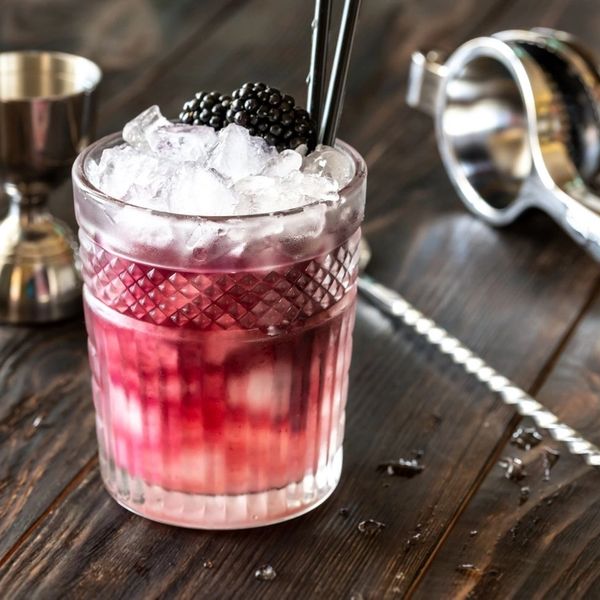
The Bramble is the cocktail for winter evenings that call for fruit: 6 cl gin, 3 cl lemon and 1.5 cl syrup over crushed ice, in a short glass, then 1.5 cl crème de mûre (blackberry liqueur) poured last, in a thin stream, which trickles slowly down through the ice. It is dark, tangy, and takes a minute to make. A crème de cassis (blackcurrant liqueur) or a raspberry liqueur can stand in without betraying it.

Got some at home?
Crème de mûre (blackberry liqueur)
The Strawberry Daiquiri is more festive, and simpler than it looks out of season: frozen strawberries, picked ripe, replace some of the crushed ice and give a fruitier, less diluted cocktail. For two: 12 cl white rum, 8 cl lime juice, 4 cl sugar syrup and a dozen strawberries, blended with about 200 g crushed ice. Taste before adding all the syrup: depending on the fruit, half is sometimes enough.
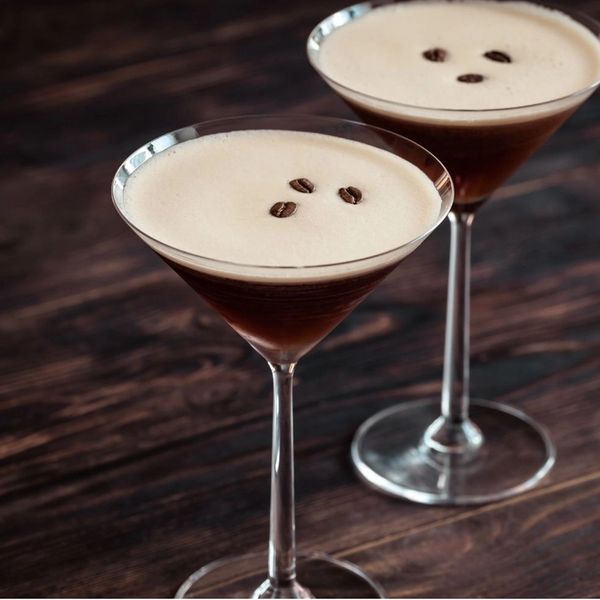
After the meal, the coffee can become the cocktail. The Espresso Martini calls for 5 cl vodka, 2 cl espresso, 2 cl coffee liqueur and a pinch of salt; its chocolate version, 5 cl chocolate liqueur, 2.5 cl vodka, 2.5 cl espresso and 2 cl coffee liqueur. Just one condition, but it is absolute: the espresso must come straight from the machine as you shake. Its gas is what creates the pale foam on top; cooled coffee will give you none. Shake hard, serve at once.
A dinner for two is for sharing, even when one of you does not drink alcohol, and every moment of the evening has its equivalent. The Virgin Cosmopolitan keeps the pink colour and the Martini glass; the Virgin Strawberry Daiquiri blends the same strawberries and the same lime, without the rum; the Pomegranate Rosemary Mocktail, a deep red, is made the day before like a real cocktail. You raise two glasses that look alike.
Everything that can be done ahead, is: the lemons squeezed and kept cold in a small bottle, the syrup ready, the glasses in the freezer, the champagne in the fridge since the day before. For the sours, crack the egg in advance and keep the white covered and chilled. All that is left is the gesture, a few seconds of shaking, and it is the one moment of the evening when it is pleasant to be watched at work.
The one that opens the evening’s bottle
Gin, lemon, cane sugar syrup, topped up with champagne. It takes only a sixth of the bottle: the rest waits in the cold for the meal.
See the recipe →The pink cocktail bartenders take seriously
Gin, raspberry, lemon, dry vermouth and egg white. The vermouth stops it turning into confectionery; a homemade raspberry syrup transforms it.
See the recipe →Blackberry trickling through the ice
Gin, lemon and syrup over crushed ice, crème de mûre (blackberry liqueur) poured last. Dark, tangy, ready in a minute; blackcurrant can stand in without betraying it.
See the recipe →Strawberries, even in February
White rum, lime, syrup and strawberries blended with ice. Out of season, frozen strawberries make a fruitier, less diluted cocktail.
See the recipe →Coffee, as a cocktail
Vodka, espresso, coffee liqueur and a pinch of salt. The espresso must come straight from the machine as you shake: that is what makes the foam.
See the recipe →The same pink colour, alcohol-free
Cranberry, orange, lime and orange zest, served in a frosted Martini glass: so you can raise two glasses that look alike.
See the recipe →The same egg white, another pink
Gin, lemon, sugar and half a centilitre of grenadine. More direct than the Clover Club, it shares the evening’s egg with it: one white for two.
See the recipe →The French 75 with rum and honey
Golden rum, lime, honey syrup, champagne. Rounder and warmer than the French 75, served in a coupe.
See the recipe →Bubbles and a rosé aperitif
Gin, Lillet Rosé, mint and lemon muddled, then champagne over ice. With a rosé champagne, the colour follows.
See the recipe →The dessert version
Chocolate liqueur, vodka, espresso and coffee liqueur. The chocolate dominates on purpose: this is the cocktail that replaces dessert.
See the recipe →The same strawberries, without the rum
Strawberries, lime and syrup blended with crushed ice. The exact counterpart of the Strawberry Daiquiri, for anyone who does not drink alcohol.
See the recipe →A deep red, made the day before
Pure pomegranate juice, homemade rosemary syrup and soda water. Real cocktail craft, alcohol-free, that holds its own against the other glasses.
See the recipe →To finish the bottle the next day
Orange juice, champagne and a spoonful of Grand Marnier. If the bottle is not finished, it keeps stoppered in the fridge until brunch.
See the recipe →Tick what you already have: the recipes you can make update in My Bar.
A sparkling cocktail for the aperitif, such as the French 75, which opens the bottle of champagne you will finish at the table. For colour, the Clover Club or the Pink Lady, pink without food colouring; for fruit, the Bramble or the Strawberry Daiquiri; to finish, an Espresso Martini instead of coffee.
Through the ingredients themselves: the raspberry in the Clover Club, the grenadine in the Pink Lady, the cranberry in the Cosmopolitan, the crème de mûre (blackberry liqueur) in the Bramble, or the Lillet Rosé in the Champagne Smash. A homemade raspberry syrup, made from raspberries crushed into warm sugar syrup and then strained, gives the most vivid colour.
Close it with an airtight stopper and keep it in the fridge: the next day it makes a Mimosa for brunch, with orange juice, champagne and a spoonful of Grand Marnier. The bubbles fade over time, and this is precisely the cocktail that copes with that best.
Partly: the lemons can be squeezed and the syrup made during the day, kept cold, and the egg white keeps covered in the fridge. The glasses go in the freezer. The champagne, the ice and the espresso, on the other hand, only go in at the very last moment.
Try them
And at home?
* Prices and availability come from Amazon, are accurate as of the date and time shown (Paris time) and may change. The price and availability shown on Amazon.fr at the time of purchase apply.