French 75
The one to start with
Gin, lemon and sugar shaken, then the champagne poured on top without stirring. Dry, lively, ready in two minutes. The best evening-opener in the repertoire.
See the recipe →
New Year's Eve (the réveillon, as the French call it) has one feature Christmas doesn't: it goes on. You start at eight in the evening, you finish at two in the morning, and the bottle of champagne at midnight covers only a moment of the night. The rest of the time, your guests drink whatever you give them.
Sparkling cocktails are the right answer for a practical reason: they are lower in alcohol than a short cocktail, they are quick to make, and they are drunk slowly. Eight of them use the same base, a brut crémant (French sparkling wine made the same way as champagne), and differ in what you add.
The French 75 opens an evening better than anything else. Gin, lemon, sugar, topped up with champagne. It is lively, it never cloys, and you can make it while your guests take off their coats. If you only remember one from this list, make it this one.
In the same dry register, the St-Germain Spritz replaces the gin with an elderflower liqueur and gives a floral cocktail, lighter still, at around 12% ABV in the glass. It goes down very well with people who say they don't like cocktails.
The Bellini and the Mimosa are the two classics of the genre, one made with peach purée, the other with orange juice. They have one flaw: made badly, they are syrupy. The rule is the same for both, one third fruit to two thirds bubbles, and above all freshly squeezed juice or a purée with no added sugar. The Champagne Smash, for its part, is made with whatever is lying in the fruit bowl, crushed at the bottom of the glass.
The Soupe Angevine is the wedding cocktail of Anjou, in the Loire Valley: Crémant de Loire, Cointreau, cane sugar syrup, lemon, made an hour ahead in a large bowl. It always disappears faster than expected. The Cointreau Spritz follows the same logic, with orange juice added. For these two, the one absolute rule is never to put the ice in the bowl: it melts, it dilutes, and by eleven o'clock you are serving fizzy water.

Got some at home?
Cointreau
Allow two and a half glasses per person over the evening, or about twenty-five sparkling cocktails. In practice: four bottles of crémant, one bottle of gin or liqueur depending on the recipes you choose, ten lemons, and a litre of fruit juice if you are making the fruity ones. Buy one more bottle than your calculation says. It always gets used.

The one everybody makes: bringing out the good champagne at midnight, after four hours of cocktails. Nobody will really taste it. Our advice, for what it's worth: serve the good champagne early, as guests arrive, when palates are fresh, and keep the crémant for the cocktails and for the last stroke of midnight. You will please those who know, and the others won't notice a thing.
The one to start with
Gin, lemon and sugar shaken, then the champagne poured on top without stirring. Dry, lively, ready in two minutes. The best evening-opener in the repertoire.
See the recipe →The floral one everybody likes
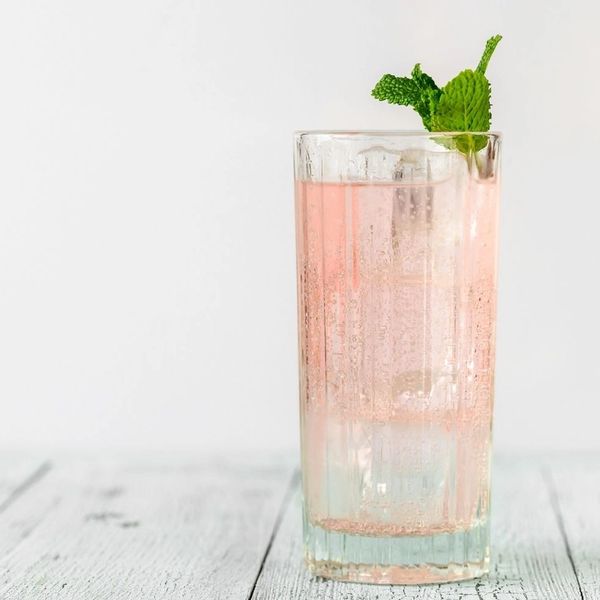
Elderflower liqueur, prosecco, soda water. Around 12% ABV, light, fragrant. This is the one to serve people who “don't drink cocktails”.
See the recipe →The New Year's Eve classic
Freshly squeezed orange juice and bubbles, in equal parts or two thirds bubbles to one third juice. With juice from a carton, it falls flat. Squeeze your own oranges: the difference is immediate.
See the recipe →Peach, the modern way
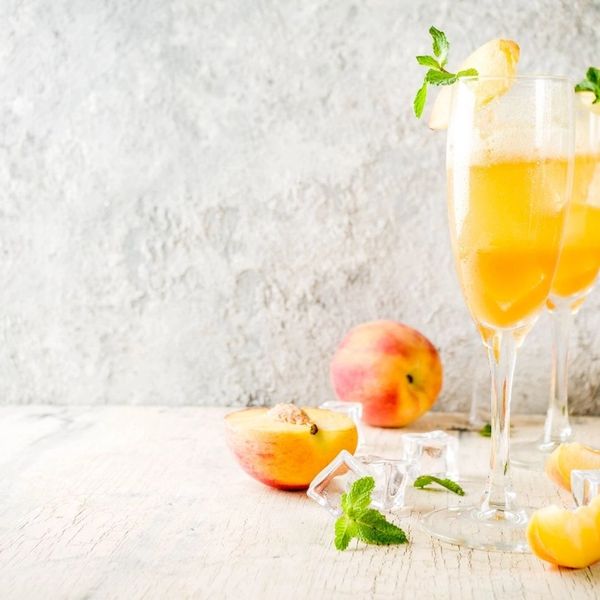
White peach purée and prosecco, the Harry's Bar recipe from Venice, reworked as a spritz. Use a purée with no added sugar, or the cocktail turns into a dessert.
See the recipe →The improvised one
Crushed fresh fruit, lemon, bubbles. Raspberries, strawberries, grapes, whatever you have. Crush at the bottom of the glass, add the ice and then the bubbles, and don't stir.
See the recipe →The punch bowl that empties first
Crémant de Loire, Cointreau, cane sugar syrup, lemon. Made an hour ahead, served with a ladle, and never any ice in the bowl.
See the recipe →Orange and bubbles
Cointreau, prosecco, orange juice, soda water. A spritz with no bitter aperitif, easy to make in large batches, that lasts well through the evening.
See the recipe →The only one served with its own shot
Vodka, passion fruit, vanilla, lime, served with a small glass of champagne on the side. London, 2000s. The ritual of the shot next to the glass always goes down well at midnight.
See the recipe →Tick what you already have: the recipes you can make update in My Bar.
The French 75 to start, dry and quick to make, then fruity sparkling cocktails in the middle of the evening. For a large group, the Soupe Angevine or the Cointreau Spritz can be made in a large batch an hour ahead.
Allow two and a half glasses per person over a New Year's Eve party, or about twenty-five cocktails. Four bottles of crémant, one bottle of spirit or liqueur depending on the recipes, about ten lemons and a litre of juice if you are making the fruity ones. Plan one more bottle than your calculation says.
Crémant for the cocktails, without hesitation: lemon, sugar and liqueurs completely mask the finesse of a champagne. Save the good champagne to be drunk on its own, ideally early in the evening, while palates are still fresh.
Try them
And at home?
* Prices and availability come from Amazon, are accurate as of the date and time shown (Paris time) and may change. The price and availability shown on Amazon.fr at the time of purchase apply.