Cocktail Corner.

Poet’s Dream

4.1 out of 524 ratings

Click a star to rate. With the keyboard, the arrow keys choose a rating and Enter confirms it.

Gin, dry vermouth, Bénédictine and orange bitters, stirred over ice: a Martini softened with honey and herbs.

The Poet’s Dream belongs to the Martini family. It is an “improved” version: a small measure of aromatic liqueur is added to a classic cocktail to give it a distinctive taste. Here, one centilitre of Bénédictine brings its notes of honey and herbs to the gin and dry vermouth. The origin of the recipe is unclear, but two versions exist: one comes from the Waldorf-Astoria bar book, the other, given here, from the Esquire’s Handbook for Hosts.

The rest of the story

Poet’s Dream: the story

The Poet’s Dream belongs to the Martini family. It is an “improved” version: a small measure of aromatic liqueur is added to a classic cocktail to give it a distinctive taste. Here, one centilitre of Bénédictine brings its notes of honey and herbs to the gin and dry vermouth. The origin of the recipe is unclear, but two versions exist: one comes from the Waldorf-Astoria bar book, the other, given here, from the Esquire’s Handbook for Hosts.

PREP

5 min

DIFFICULTY

Intermediate

GLASS

Martini

CALORIES

≈ 195 kcal

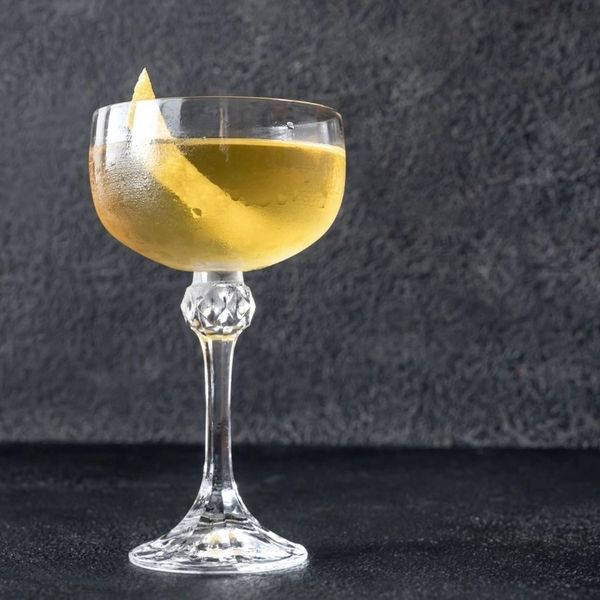
Poet’s Dream cocktail served in a martini glass

Recipe for 1 glass

1

Ingredients (for 1 glass)

My notebook

To make it

Choose a range of tools

A sound start that will not break the bank.

To stir
Mixing glass — Beavorty 70 cl

A thick-walled 70 cl mixing glass: the stability and capacity you need to stir a Negroni or a Dry Martini for two.

View on Amazon


See 2 more tools

The right balance for regular use.

To stir
Mixing glass — Beavorty 70 cl

A thick-walled 70 cl mixing glass: the stability and capacity you need to stir a Negroni or a Dry Martini for two.

View on Amazon


See 2 more tools

What bars use, built to last.

Pro
Mixing glass — Beavorty 70 cl

A thick-walled 70 cl mixing glass: the stability and capacity you need to stir a Negroni or a Dry Martini for two.

View on Amazon


See 2 more tools

Some links are affiliate links: if you buy, we may earn a commission, at no extra cost to you.

The bottles in this recipe

Excessive drinking is bad for your health. Please drink responsibly. Affiliate links.

Method

  1. Chill the glass

    Fill the Martini glass with ice cubes to chill it.

  2. Pour into the mixing glass

    Fill the mixing glass with ice cubes, then use the jigger (the measure) to pour in 6 cl of gin, 2.25 cl of dry vermouth, 1 cl of Bénédictine and 2 dashes of orange bitters.

  3. Stir

    Stir with the bar spoon for about twenty seconds to chill and lightly dilute the mix.

  4. Empty the glass

    Tip the ice out of the Martini glass.

  5. Strain into the glass

    Pour the cocktail into the glass, holding back the ice with the cocktail strainer (the sieve that holds back the ice).

  6. Express the lemon zest

    Squeeze a strip of lemon zest over the glass to release its scent, then rest it on the rim.

Bartender’s tip

Bénédictine is very sweet and very aromatic: one centilitre is the most you need, any more and it takes over. The lemon zest squeezed over the glass is not optional: it is what lifts the whole drink. Use a well-chilled glass and strain carefully.

Have you made it?

Rate it

Recipe updated on

Black Friday

Get set up for the festive season

One complete kit is enough to make this recipe and most of the others. Check Black Friday discounts with the retailer.

Some links are affiliate links: if you buy, we may earn a commission, at no extra cost to you.

Poet’s Dream variations

Poet’s Dream, Waldorf-Astoria style

4 min · Easy · €€

The other historic version, from the bar book of the old Waldorf-Astoria in New York: gin, dry vermouth and Bénédictine in equal parts, 3 cl of each, stirred over ice and served with a lemon zest. Much sweeter and more herbal than our recipe: the Bénédictine is a full ingredient rather than a seasoning. Best kept for lovers of the liqueur.

See the recipe →

Dry Martini, the base cocktail

3 min · Very easy · €€

Take away the Bénédictine and bitters and you are left with gin and dry vermouth: the Dry Martini, of which the Poet’s Dream is an “improved” version. Our Martini uses 5 cl of gin to 1 cl of vermouth, stirred, with a dash of Angostura. The Poet’s Dream is noticeably sweeter and more fragrant; the Martini drier and barer. Same glass, same lemon zest.

See the recipe →

Gin Blossom, the apricot Martini

3 min · Very easy · €€

Another Martini “improved” with a liqueur: 4.5 cl of gin, 4.5 cl of sweet blanc vermouth, 2 cl of apricot eau-de-vie (a clear, unsweetened fruit brandy) and 2 dashes of Angostura, stirred and served without ice with an orange zest. Where Bénédictine brings honey and herbs, apricot brings dried fruit and a hint of almond. Both cocktails play on the same balance between gin and vermouth.

See the recipe →

Vesper, James Bond’s Martini

3 min · Easy · €€

6 cl of gin, 2 cl of vodka and 1 cl of Lillet Blanc, shaken and served with a lemon zest, as Ian Fleming describes it in Casino Royale in 1953. Lillet, an aperitif wine from Bordeaux, replaces both the vermouth and the liqueur of the Poet’s Dream. Drier, without the herbal side of Bénédictine, it is the cousin to serve to those who like a very straightforward Martini.

See the recipe →

Frequently asked questions

What is Bénédictine?

A French liqueur made from plants and spices, 27 botanicals including angelica, hyssop, lemon balm, saffron and cinnamon, on a neutral spirit base, sweetened with honey and aged in casks. It has been made in Fécamp, in Normandy, since 1863, to a recipe that Alexandre Le Grand claimed to have from Benedictine monks. Very sweet and very fragrant, it is used in small amounts: 1 cl in the Poet’s Dream.

Where does the name Poet’s Dream come from?

No one knows who named it or why; the cocktail appears in American bar books of the 1930s and 1940s, notably the Waldorf-Astoria one and the Esquire’s Handbook for Hosts, with two different recipes. The name may come from the monastic origins of Bénédictine, or from the fashion for poetic names, like the Widow’s Kiss. It has nothing to do with the “Dream Cocktail” made with cognac and curaçao in British bar books.

What are the measures for a Poet’s Dream?

6 cl of gin, 2.25 cl of dry vermouth, 1 cl of Bénédictine and two dashes of orange bitters, stirred over ice and strained into a chilled Martini glass, with an expressed lemon zest. These are the proportions of the Esquire’s Handbook for Hosts: two parts gin to three quarters of a part vermouth and a third of a part liqueur. The Waldorf-Astoria version, in equal parts, is much sweeter: it is no longer the same cocktail.

Should a Poet’s Dream be shaken or stirred?

Stirred: like the Dry Martini, it contains only spirits, vermouth and a liqueur, with no juice or egg. About twenty seconds with a spoon in a mixing glass full of ice chills and dilutes it just enough, and the cocktail stays clear and silky. In a shaker it would turn cloudier, airier and a little more diluted: it can be done, but the texture changes.

What other cocktails use Bénédictine?

The Vieux Carré, from New Orleans, with rye, cognac, sweet red vermouth and bitters; the Singapore Sling, with gin, cherry brandy and pineapple; the B and B, a simple mix of Bénédictine and brandy in equal parts, served without ice; the Bobby Burns, a Manhattan made with Scotch and Bénédictine. In every case the liqueur is measured at 0.5 to 1.5 cl: it is there to add fragrance, never to dominate.