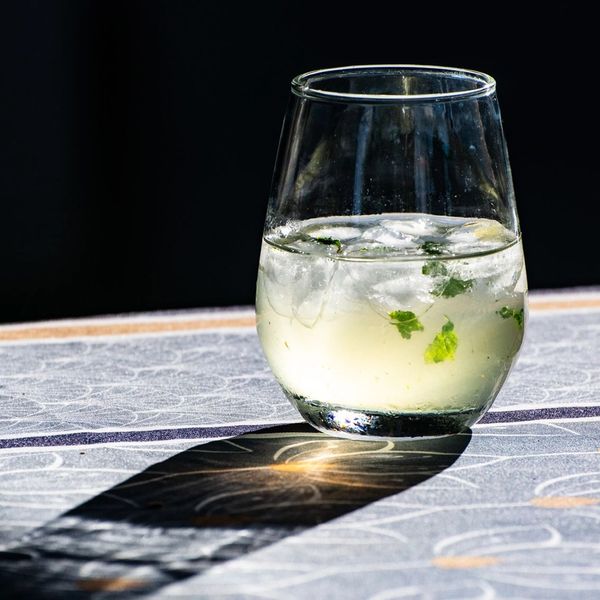
Dry January fits in a single line: a month without alcohol, from the first evening of January to the last. Everyone has their own reasons, and they are none of our business. What concerns us is what is left in the glass. The hard part of an alcohol-free month is rarely the alcohol itself: it is the ritual that goes with it. The drink you make when you get home, the glass you raise at the table, the one you hand to a friend.
A good alcohol-free cocktail is not fruit juice in a nice glass. It follows the same rules as a classic cocktail: acidity, sweetness, often bitterness, dilution and cold. In a cocktail, alcohol brings body, warmth and a hint of bitterness; take it out and you have to find those three things elsewhere, or the drink tastes flat. Every recipe below does just that, each in its own way.
Bringing back bitterness: the Virgin Americano
Bitterness is the first thing missing from an alcohol-free drink, and the hardest to replace. Fizzy drinks and juices bring sugar, not bitterness. Yet bitterness is what gives an aperitif its seriousness.
Our Virgin Americano rests on three ingredients: 4 cl of alcohol-free red bitter aperitif (such as Sanbittèr or Crodino), 4 cl of red grape juice, which plays the part of the vermouth, and 12 cl of soda water to lengthen it. It is all served over ice with an orange slice. It is the most grown-up drink in this selection, and the least sweet.
If you have no bitter aperitif, tonic water will do. In a Virgin Cosmopolitan, 3 cl of tonic poured in after shaking, in place of the orange juice, gives back some of the bite of the vodka. Always keep a bottle in the fridge: it is the easiest source of bitterness to find.
Leaning on acidity: Virgin Daiquiri and Virgin Mojito
Without alcohol, sugar soon becomes cloying; acidity is what holds the drink up. The Virgin Daiquiri is the barest proof of it: 5 cl of freshly squeezed lime juice, 3 cl of sugar syrup and 6 cl of very cold still water, shaken hard and served in a chilled coupe. The water stands in for the dilution that melting ice would bring to the rum. It is a detail, and it is what sets the drink apart from homemade still lemonade.
The Virgin Mojito follows the same logic in a tall glass: twelve mint leaves pressed gently in the bottom, not chopped, 2.5 cl of lime, 2 cl of syrup, crushed ice and soda water. Without rum, nothing hides bruised mint: press, don’t pound. If it tastes too tame, add more lime rather than more sugar.
Looking for heat: Virgin Mary and Virgin Moscow Mule
The warmth of alcohol can give way to another kind of warmth: spice. The Virgin Mary is probably the most convincing alcohol-free drink of all, because the vodka in a Bloody Mary leaves almost no taste: 15 cl of tomato juice, 2 cl of lemon, three drops of Tabasco, two dashes of Worcestershire sauce, a pinch of celery salt and a grind of pepper, ‘rolled’ (gently poured from one glass to another) over ice. Go a little heavier on the pepper and lemon: they give the depth the alcohol used to.
The Virgin Moscow Mule leaves everything to the ginger: 9 cl of ginger beer, 6 cl of soda water and 1 cl of lime, in a well-chilled mug. Choose a properly fiery ginger beer, because it makes the cocktail; a mild one turns it back into lemonade.
Keeping the party nights: Hugo, Cosmopolitan, Porn Star
January starts with New Year wishes and often brings a birthday or two. For those evenings, three recipes keep the look of a party cocktail. The Virgin Hugo is the most convincing, because a Hugo’s scent comes from the elderflower cordial, not the prosecco: 2 cl of cordial, 10 cl of alcohol-free sparkling wine or a not-too-sweet lemonade, 5 cl of soda water, lightly crushed mint and two lime slices, in a wine glass. With lemonade, halve the cordial, as the lemonade already brings its own sugar.
The Virgin Cosmopolitan keeps its pink colour and its Martini glass: 6 cl of cranberry, 2 cl of orange, 1 cl of lime and 1 cl of syrup, shaken and served without ice but properly ice-cold, with an orange zest squeezed over the top. Finally, the Virgin Porn Star Martini almost stands up on its own, since passion fruit and vanilla already did most of the work in the original. The small glass of champagne served alongside becomes a small glass of well-chilled lemonade: the ritual stays, raised glass included.
For those who like to make things: the Pomegranate Rosemary
The Pomegranate Rosemary Mocktail takes a little forward planning, and that is what makes it interesting. The day before, make a syrup of equal parts brown sugar and water, infused with a few sprigs of rosemary that you remove once the syrup has cooled. On the day: 3 cl of this syrup, 3 cl of pure pomegranate juice and soda water, over ice in a tall glass. The result is fruity, herbal, slightly tannic, and tastes like no fizzy drink you know. The syrup keeps for two to three weeks in the fridge, enough to cover a good part of the month.
What to buy in December
You stock an alcohol-free month like a bar: a few basic bottles cover every recipe on this page. Limes and lemons, plenty of them; sugar syrup, or sugar and water to make it; soda water and tonic water; a fiery ginger beer; an alcohol-free red bitter aperitif; an alcohol-free sparkling wine for party nights; cranberry juice and pure pomegranate juice. Add one more ice tray than usual: without alcohol, everything depends on the cold.
Two words of caution if you want a month at strictly zero. Aromatic bitters, such as Angostura, contain alcohol: when they appear in our alcohol-free recipes, as in the Virgin Cuba Libre, they are optional and you can simply leave them out. Dealcoholised wines and sparkling wines may keep a trace of alcohol: the label states the ABV (alcohol by volume), so read it. The rest is a matter of taste, and January is a good month to discover new ones.